Bridge Rescue
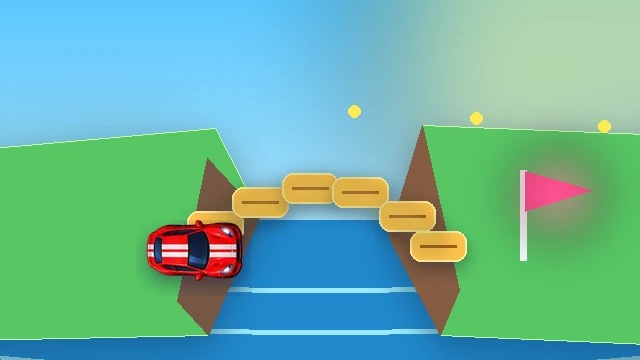
physicsA draw-and-drive rescue puzzle where one limited road stroke must carry a car across the gap.
GENRE
Play free rescue puzzle games online. Plan the safe order, draw protection or build a route, then start instantly with no download.
3 games · Free to play
Browse all gamesTry another title or game type. Your next little win is in here somewhere.
A rescue puzzle gives you one person to protect and one committed action to get right. BopBits splits that idea three ways: Pin Rescue is about order, where the pins you pull and the sequence you pull them in decide whether a hazard lands; Draw Rescue is about shape, where a limited amount of ink has to become a shelter strong enough to survive the simulation; and Bridge Rescue is about route, where one length-limited road must carry a car across a canyon. All three run the same deterministic physics every attempt, so a retry tests your revised plan rather than your luck.
Trace the hazard path or sketch the route first — every one of these games rewards reading the scene over reacting to it.
Deterministic physics means the same drawing or pin order produces the same outcome, so you can see exactly which part of the plan was wrong.
Bridge Rescue stars a shorter road and Draw Rescue rewards compact shelters, but a safe solution always counts as a win first.
Each rescue game hands you exactly one scarce thing and asks you to spend it well, and the scarcity is what turns them into puzzles rather than dexterity tests.
Pin Rescue's resource is order. The pins are all available; the question is which sequence keeps the hero safe, and an irreversible hazard resolved in the wrong place ends the level regardless of what you do next.
Draw Rescue's resource is ink. A limited amount of line has to become a shelter that survives the hazard sequence, so compact and well-anchored beats large every time — short arches hold where long flat roofs fold.
Bridge Rescue's resource is road length. One length-capped stroke has to carry a car across a canyon, and higher arcs cost more of the budget while clearing hazards that punish a low shortcut.
All three run the same deterministic physics on every attempt, which is the design decision that makes these games teachable. An identical drawing or pin order always produces an identical outcome, so a retry is a genuine second attempt at the same problem rather than another roll of the dice.
That changes how to approach a failure. Instead of adjusting slightly and hoping, it pays to identify the specific moment the plan broke — the hazard that arrived early, the section of line that flexed, the arc that clipped a spike — and change that one thing.
Optimisation is deliberately optional. Bridge Rescue stars a shorter successful road and Draw Rescue rewards compact shelters, but neither is required: get everyone out first, and treat elegance as a second pass once you know the level is solvable.
A rescue puzzle asks you to protect a character or vehicle using one limited resource — a sequence of pins, a fixed amount of ink, or a length-capped road — then plays out the physics so you can see whether the plan held.
No. Short arches beat long flat roofs and anchored lines beat large ones, so these are shape and placement decisions rather than tests of a steady hand.
No. Every level uses fixed, deterministic physics, so an identical drawing or pin order always produces an identical result and each retry is a genuine second attempt at the same problem.